A thousand years of miyabi
From the founding of Heian-kyō in 794 to the neon of today, Kyoto has remained Japan's keeper of refinement, ritual and seasonal awareness.
If Tokyo is Japan's head, Kyoto is its heart. For over a millennium this was the seat of emperors, poets, priests and artisans — and every one of them left a trace in the city's bones.
A brief history
Kyoto was founded in 794 CE under Emperor Kanmu, who named his new capital Heian-kyō, the "Capital of Peace and Tranquillity." It would remain the imperial seat until 1868, when power moved to Edo — the city we now call Tokyo. That thousand-year tenure explains why so much of Japan's classical literature, architecture and courtly culture is anchored here.
During the Second World War, the city was removed from the list of bombing targets, reportedly on cultural grounds. As a result, Kyoto's historic core survived largely intact where cities like Tokyo and Osaka were rebuilt from ruins.
Culture and the arts
Kyoto is where many of Japan's defining traditions were refined to something close to philosophy. The tea ceremony (sadō) was formalised here in the 16th century. Ikebana, kabuki and Noh all trace lineages to the city. Even the seasonal cuisine called kaiseki — a meditation on what's best in a given month — was born in Kyoto temples and tea houses.
"In Kyoto, you do not so much visit the past as share it with the present."
Festivals worth planning around
- Gion Matsuri (July) — a month-long festival dating to 869, famous for its elaborate floats.
- Jidai Matsuri (October) — the "Festival of the Ages," a costume procession through the city.
- Hanami (late March to early April) — cherry blossom season transforms every canal and park.
The rhythm of the year
Kyoto is a city of strong seasons, and locals read them with care. Spring brings sakura; summer is humid and dense with festivals; autumn turns every maple to fire; and winter is cold, clear and quiet — a time when snow on temple roofs feels like a private gift.
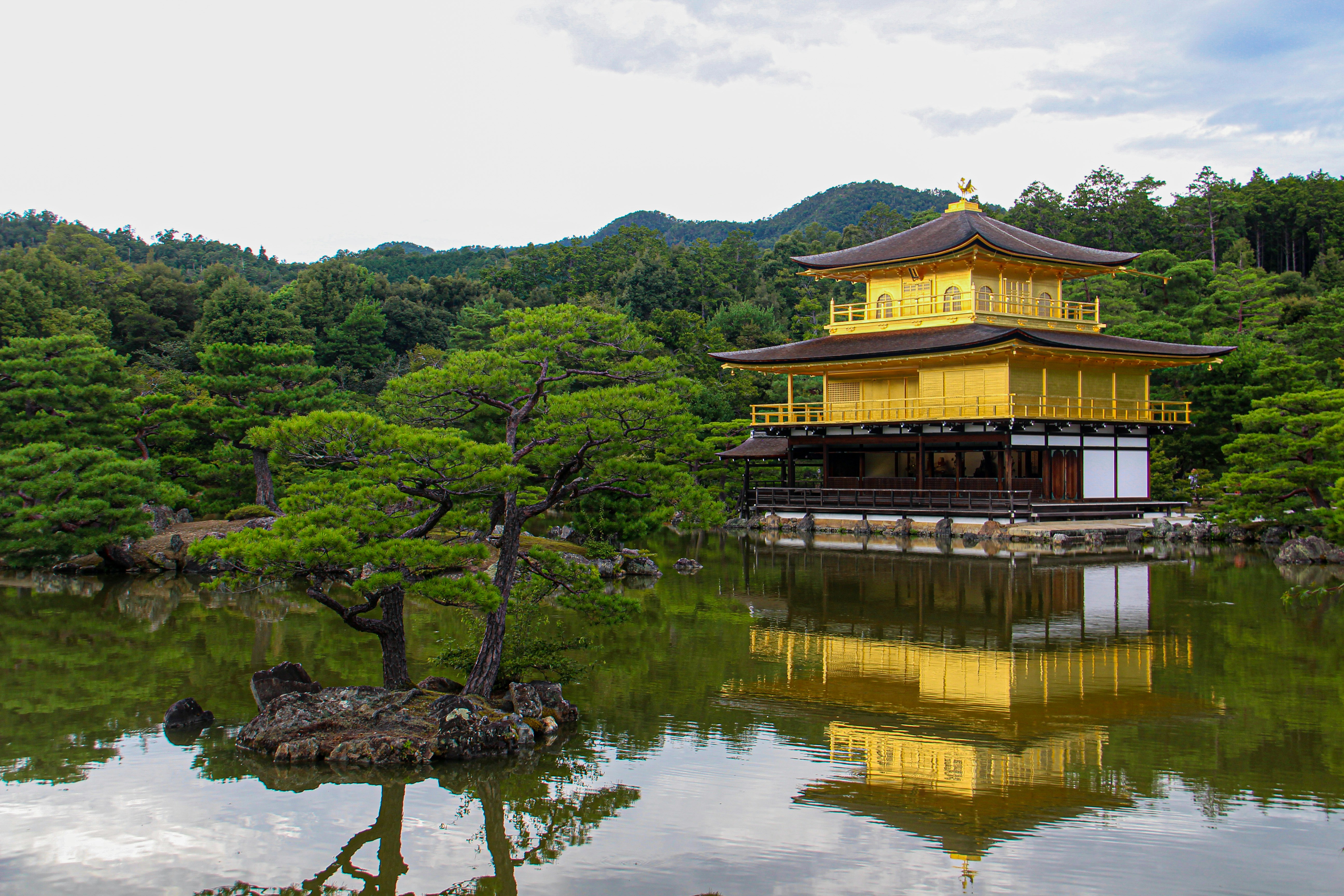
For a first visit, many travellers choose late March, late October or early November. But Kyoto rewards the off-season visitor too: in June the hydrangeas glow in the rain, and in February a dusting of snow on Kinkaku-ji is one of the rarest and most beautiful sights in Japan.