What to See

Attractions

From UNESCO-listed temples to quiet philosopher's paths — the places we'd send a first-time visitor.

Top Attractions

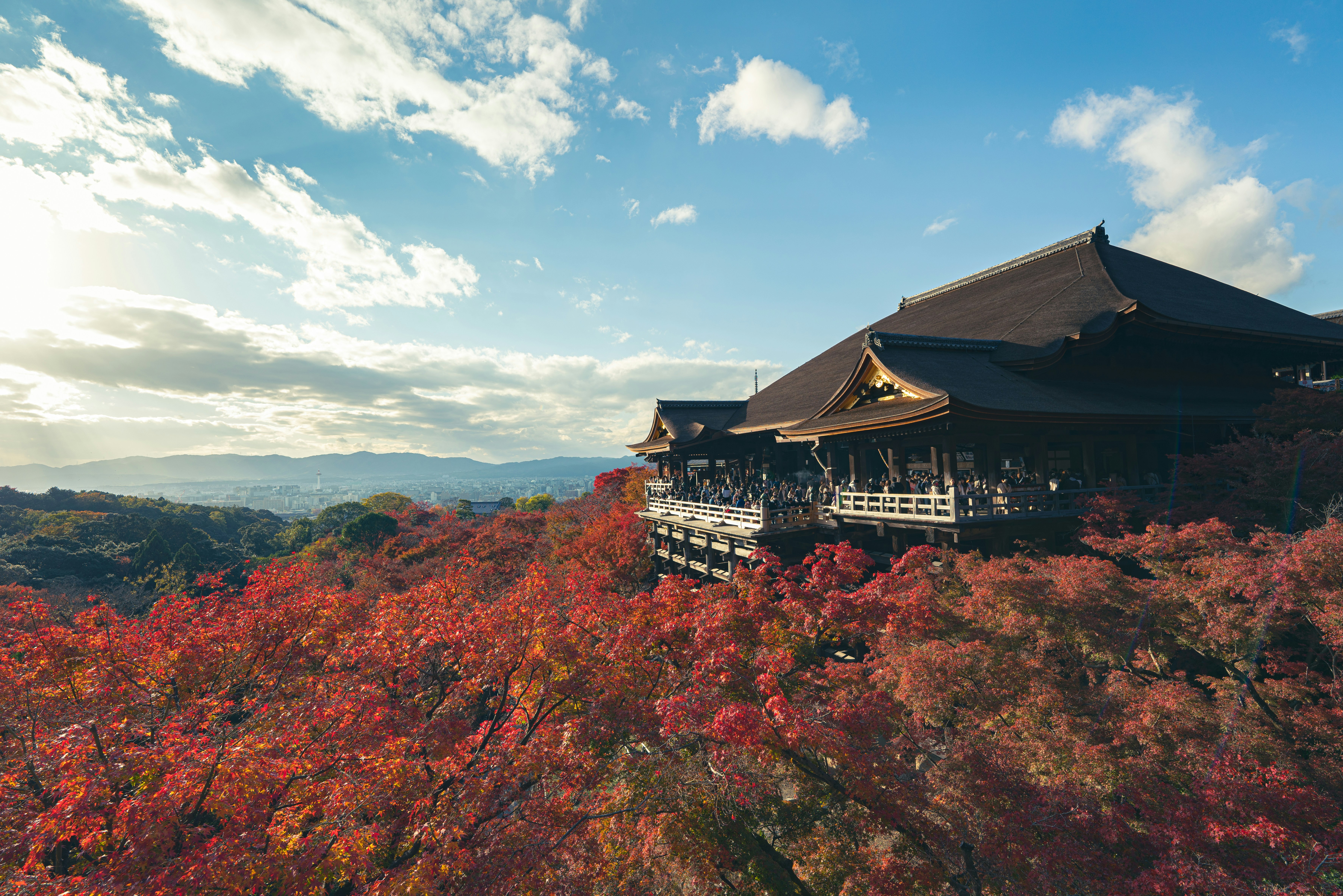
UNESCO The wooden stage of Kiyomizu-dera temple overlooking forested hills

Kiyomizu-dera

Founded in 778, this temple is named for the pure spring water that still runs beneath it. Its great wooden veranda, built without a single nail, extends 13 metres above the hillside and offers one of the most famous views in Kyoto.

Higashiyama
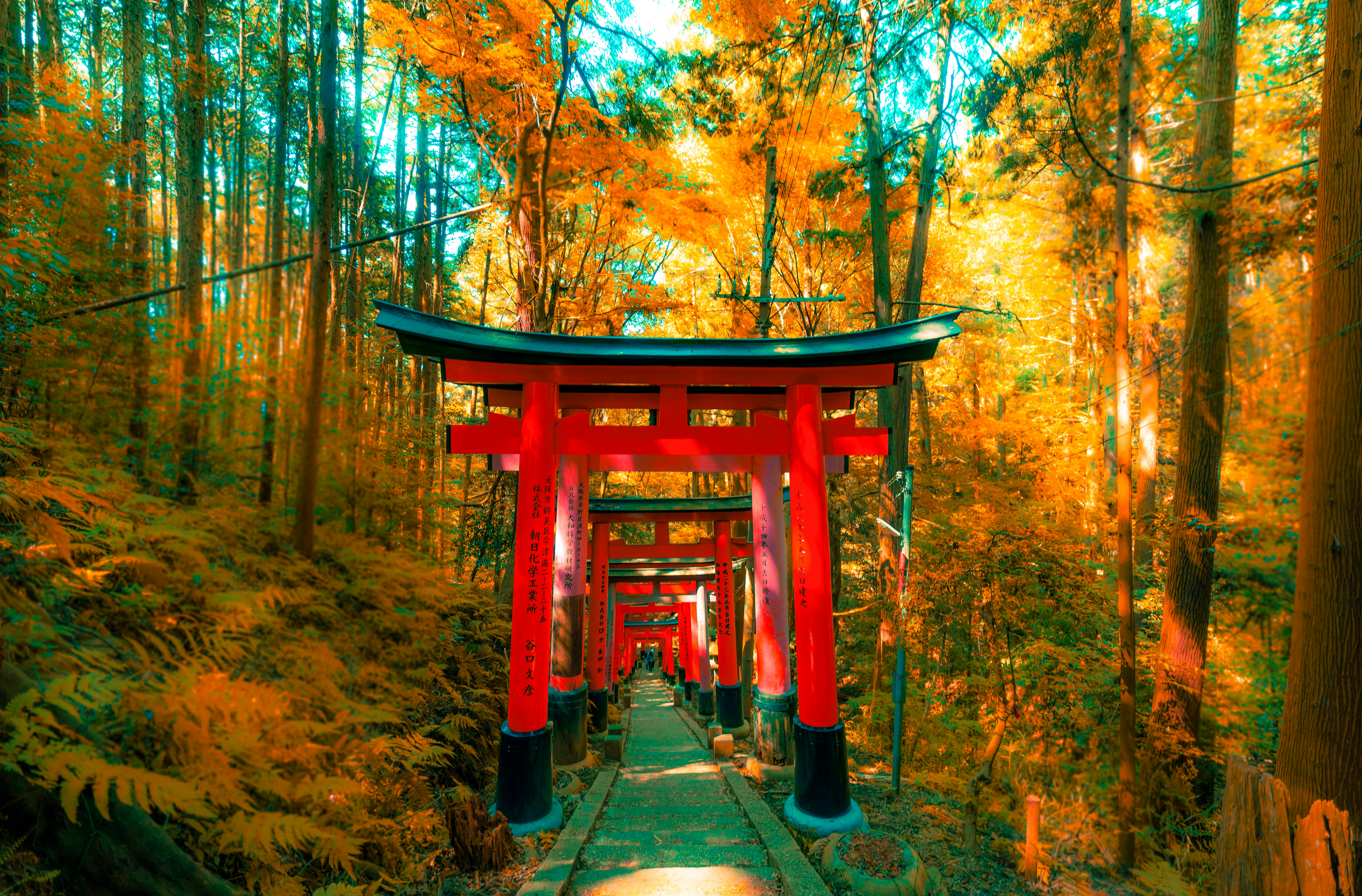
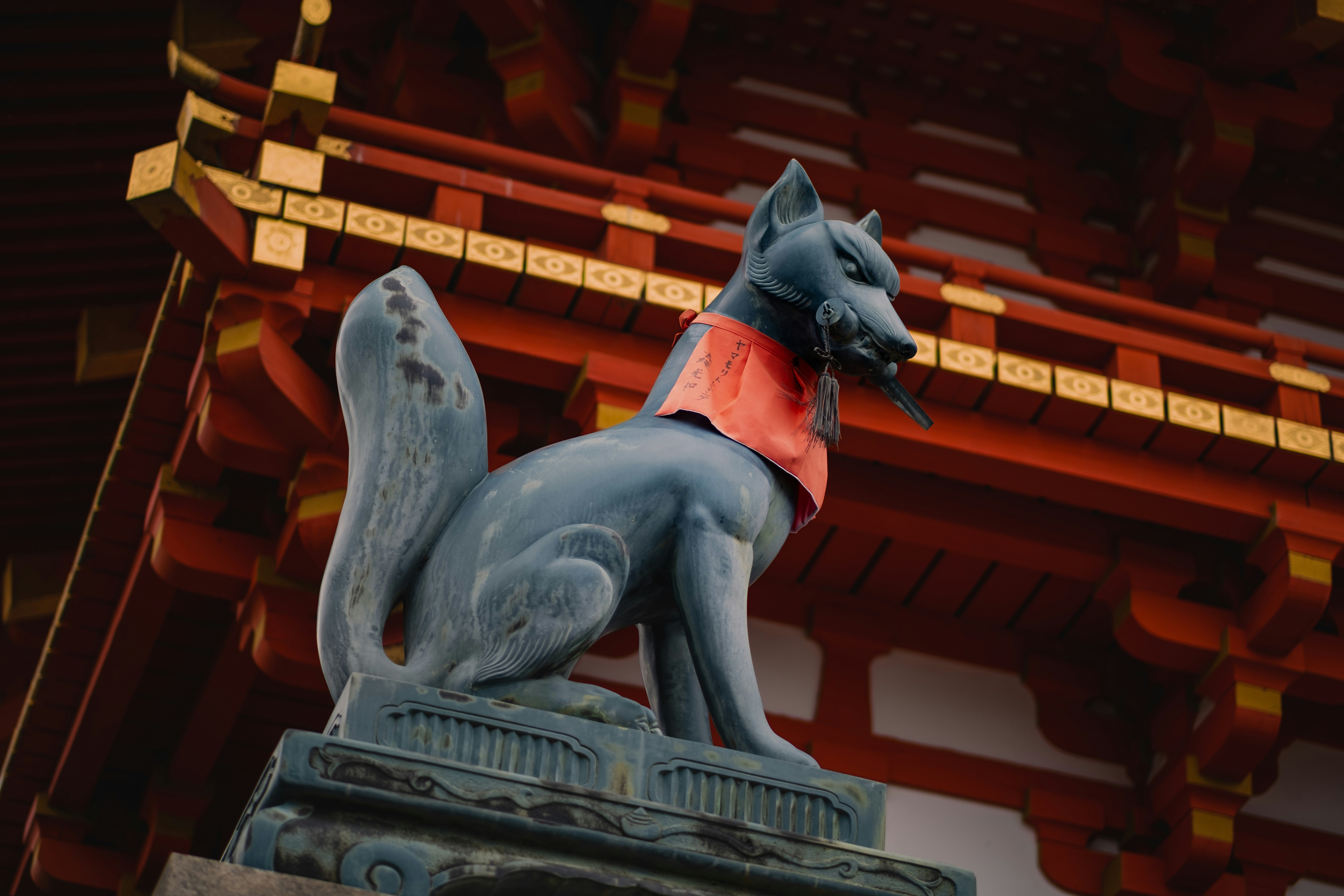
Shrine Rows of red torii gates forming a tunnel at Fushimi Inari

Fushimi Inari Taisha

Dedicated to Inari, the Shinto deity of rice, this shrine is celebrated for the thousands of torii gates that spiral up Mount Inari. The full hike takes two to three hours; the quietest sections are beyond the halfway point.

Southern Kyoto
Zen Garden The dry rock garden at Ryoan-ji temple with raked white gravel

Ryoan-ji Rock Garden

Japan's most famous Zen garden contains fifteen stones arranged so that from any viewing angle, one is always hidden. Its meaning has been debated for five centuries — which may be the point.

North-west Kyoto
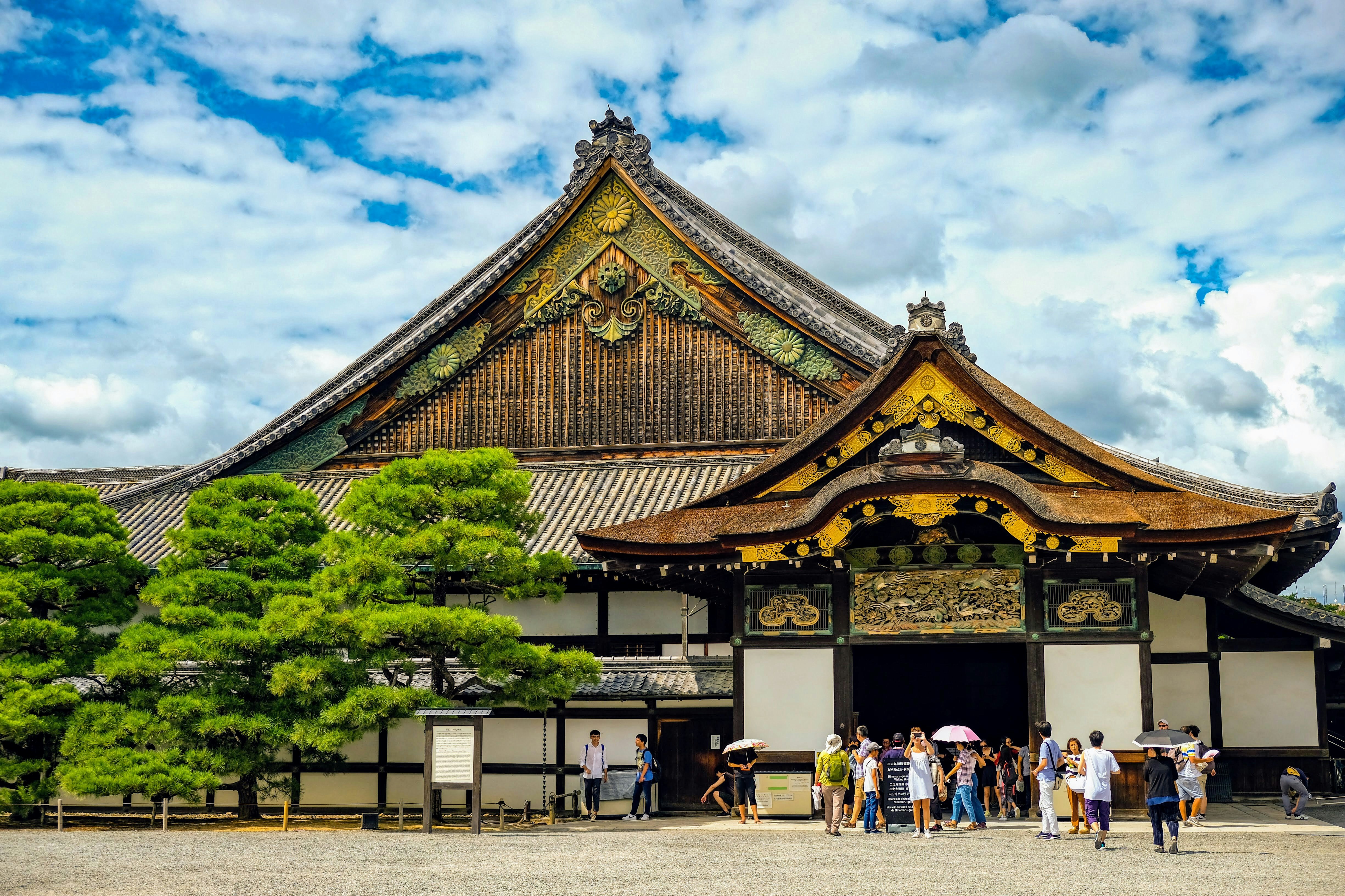
Castle The white walls and dark curved roof of Nijo Castle

Nijo Castle

Built in 1603 as the Kyoto residence of the Tokugawa shoguns. Its famous "nightingale floors" were engineered to chirp underfoot, warning of intruders — a security system centuries ahead of its time.

Central Kyoto
Nature The Arashiyama bamboo grove with tall green bamboo on both sides of a path

Arashiyama Bamboo Grove

A short but unforgettable walk through towering bamboo. Visit before 8am if you can — after nine the path fills up quickly. Combine with nearby Tenryu-ji temple and the Iwatayama monkey park.

West Kyoto
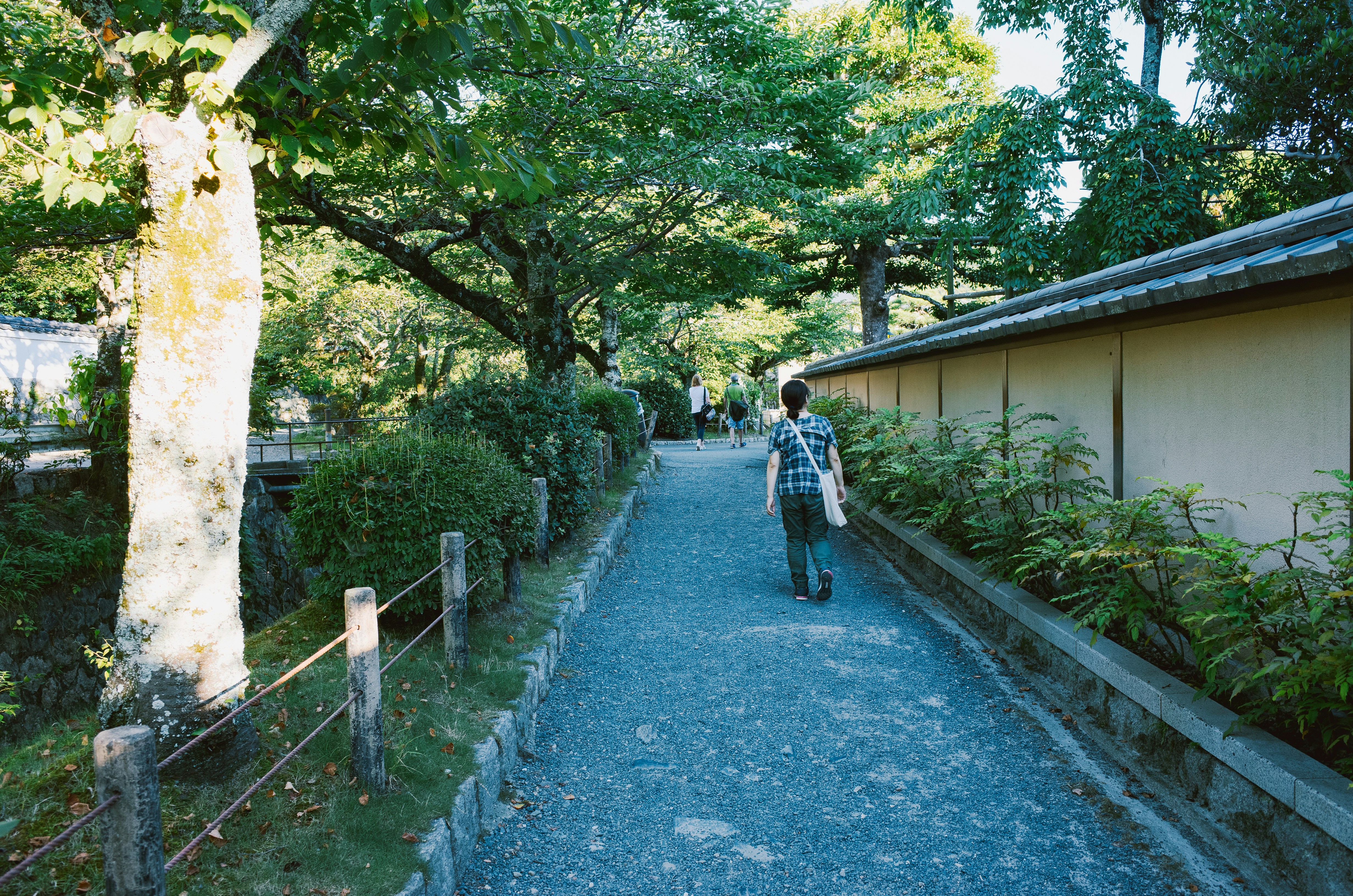
Walk Cherry blossoms hanging over a canal on the Philosopher's Path

Philosopher's Path

A two-kilometre stone path beside a canal, named after the philosopher Nishida Kitarō who walked it daily. In spring the cherry blossoms turn it into one of Kyoto's most photographed routes.

Higashiyama
A quiet tip

Visit the famous sites early or very late

Most of Kyoto's headline attractions open between 6 and 9 in the morning. Arriving at opening or in the last hour before closing can transform the experience — fewer crowds, softer light, and a chance to actually hear the place.